


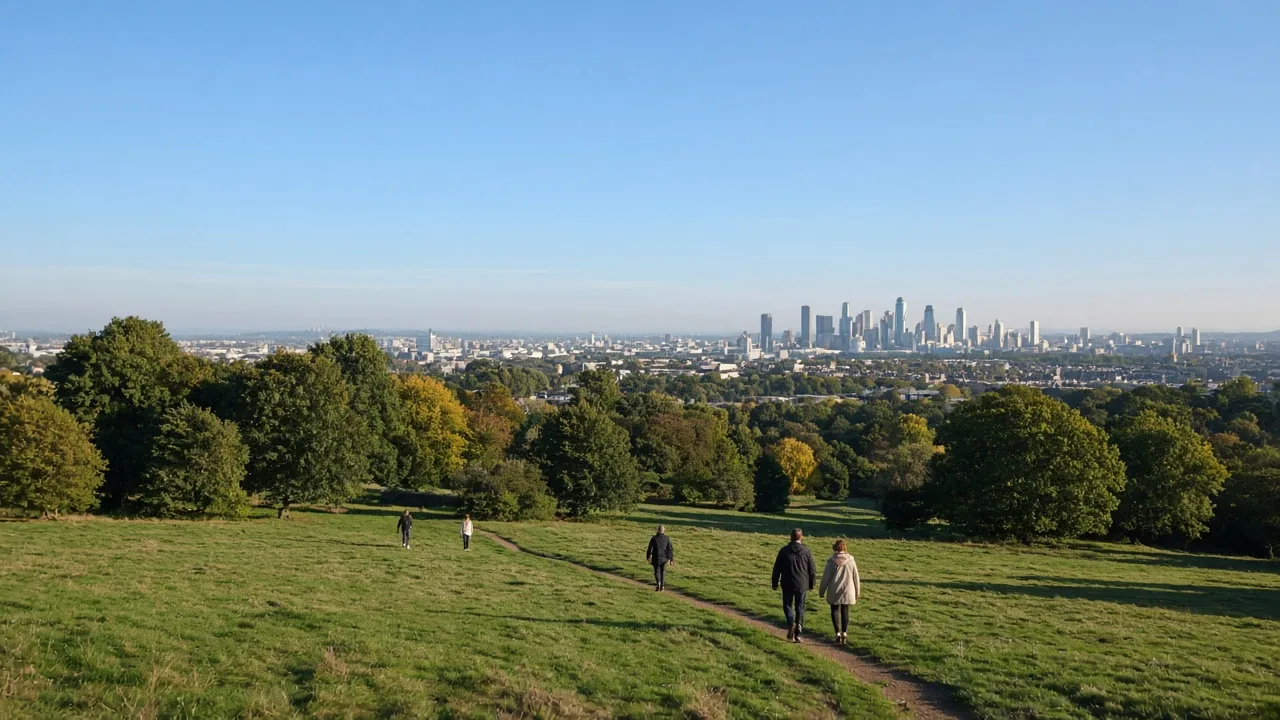
Hampstead Heath is one of London's largest green spaces, a patchwork of ancient woodland, meadows, ponds and hilltops that covers around 790 acres on the northern edge of Camden and neighbouring boroughs. For many Londoners it is simply the Heath, a place for dog walks, picnics, early swims and long Sunday strolls. For a first-time visitor, its size can be a little daunting, so here is a straightforward plan.
Where the Heath Is and How to Get There
The Heath sits north of central London, with entrances on several sides. Hampstead Heath and Gospel Oak stations on the Overground line, Hampstead and Golders Green on the Northern line and a number of bus routes all serve different edges of the park. Because the Heath is large, choose the entrance that matches your plan: Gospel Oak or Hampstead Heath for Parliament Hill, Hampstead station for the village and the western side, and Highgate for the wooded eastern side.
Parliament Hill and the View
The best-known viewpoint is Parliament Hill, on the south-east side of the Heath. From the top, on a clear day, you can see the City of London skyline, including its towers, and out across the capital. The hill is a popular spot for kite flying and for watching the sun set. The climb is gentle and manageable for most people, though paths can be muddy after rain. Another popular viewpoint is near Kenwood House on the northern side, where lawns slope down to a lake.
The Swimming Ponds
The Heath is famous for its outdoor swimming ponds. There are separate ponds for men, for women and for mixed bathing, as well as a lido on the edge of the Heath. The ponds are open to swimmers year round, and the water is cold even in summer. Access is controlled by lifeguards, and entry usually involves a fee or season ticket. Rules, opening hours and any seasonal restrictions are set by the City of London Corporation, which manages the Heath, so check the current guidance before you go. If you are new to cold water, ease in slowly and swim with a friend.
Woodland, Meadows and Wildlife
Away from the hilltops, the Heath has dense woodland and open meadows, with wildlife that includes woodpeckers, foxes, bats and a range of butterflies. The Hampstead Heath Extension and Golders Hill Park on the north-west side offer a more formal garden setting, including a small zoo area with deer and some farm animals. In spring, bluebells and wild flowers appear in sheltered sections.
Kenwood House
Kenwood House is an eighteenth-century country house on the northern edge of the Heath, set within landscaped grounds. It is managed as a public attraction and houses a collection of paintings. There is a cafe and a terrace, and the grounds are open to everyone. A visit combines well with a walk through the surrounding woodland.
Practical Tips for Your First Visit
- Wear sturdy shoes. Many paths are unpaved and can be muddy for much of the year.
- Take a map or download a route in advance. Signs are limited, and it is easy to lose your bearings in the woods.
- Bring water and snacks, although there are cafes near the main entrances.
- If you have a dog, follow signs about where dogs must be kept on leads, especially near ponds and wildlife areas.
- Check opening hours for gates, cafes and swimming facilities, as these can change.
- Avoid isolated paths after dark and let someone know your route if walking alone.
A Simple Half-Day Route
A pleasant first loop starts at Hampstead Heath station, crosses the open meadows to Parliament Hill for the view, then follows the paths past the ponds before turning towards Hampstead village for lunch. The walk takes around two hours at a relaxed pace. If you still have energy, extend it north to Kenwood House.
The Heath rewards repeat visits. Each season changes its character, and the longer you spend there, the more corners you will discover. For a first-timer, a quiet morning, a good map and a little curiosity are all you need.
